新三国演义
Pacific and Atlantic hurricanes Norma and Tammy make landfall on Saturday in Mexico and Barbuda_我的网站

一 | CABO SAN LUCAS, Mexico -- Hurricane Norma came ashore near the Pacific resort of Los Cabos at the southern tip of Mexico’s Baja California Peninsula on Saturday afternoon. Hours later, Hurricane Tammy made landfall on the Caribbean island of Barbuda.The storms were each Category 1 hurricanes when they hit.There was a threat of heavy rainfall and flash flooding as Norma moved into mainland Mexico early Sunday, the U.S. National Hurricane Center in Miami reported at 3 a.m. ET.Norma was centered about 145 miles (235 kilometers) west of Culiacan, Mexico, and about 105 miles (165 kilometers) south-southwest of Los Mochis, Mexico, moving north-northeast at 7 mph (11 kph) with maximum sustained winds of 60 mph (95 kmh). The Mexican government extended a tropical storm warning along the coast northward to Huatabampito, the center said.Tammy came ashore Saturday night with 85 mph (140 kph) winds. In an update at 5 a.m. ET Sunday, the hurricane center said the storm was centered about 70 miles (115 kilometers) north-northwest of Barbuda and about 55 miles (90 kilometers) east-northeast of Anguilla.Tammy was moving north-northwest around 10 mph (17 kmh) and hurricane warnings remained in effect for the islands of Barbuda, Anguilla, St. Martin and St. Barthelmy, while a tropical storm warning was discontinued for Saba and St. Eustatius.Norma, once a Category 4 hurricane, moved ashore with winds of 80 mph (130 kph) near el Pozo de Cota, west-northwest of Cabo San Lucas. The system later weakened to a tropical storm with 70 mph (110 kph) winds as it crossed the Baja California Peninsula, the center said.Businesses in Cabo San Lucas had nailed plywood over their windows, and government personnel hung banners warning people not to try to cross gullies and stream beds after Norma regained strength and again became a major storm Friday.President Andrés Manuel López Obrador said via X, the platform formerly known as Twitter, that there had been no reported loss of life from the storm by Saturday night.In Cabo San Lucas, curious tourists began to pick their way along debris-strewn beaches after the storm passed.Authorities urged people to stay at home Saturday night. There were still families in shelters in Cabo San Lucas and San Jose del Cabo, though officials did not say how many. Around 200 people were in shelters in La Paz.Its languid pace raised the possibility of severe flooding. Norma was expected to dump six to 12 inches of rain, with a maximum of 18 inches in places across southern Baja California and much of Sinaloa state. John Cangialosi, a senior specialist at the National Hurricane Center, said the area is vulnerable to rain because it is a dry region generally. "Six to 12 inches of rain is what is generally forecast, but there could be pockets of up to 18 inches of rain and we do think that will be the most significant impact that could result in flash and urban flooding and mudslides,” he said.Baja California Sur Gov. Victor Castro said on X that “because it's moving slowly, greater damages are anticipated.”But little damage was initially reported. Some trees and power poles were down, but there were no reports of injuries.Police in San Jose del Cabo rescued two people from their truck when a surging stream swept it away early Saturday. Some informal settlements, away from the hotels that serve tourists, were isolated by rising water. Some neighborhoods lost electricity and internet service.The federal government posted 500 marines to the resort area to help with storm preparations.By late morning, the area's streets were littered with palm fronds and other debris, and essentially deserted except for occasional military patrols. Strong winds whipped traffic signs, trees and power lines.Hotels in Los Cabos, which are largely frequented by foreign tourists, remained about three-quarters full and visitors made no major moves to leave en masse, officials said. The local hotel association estimated about 30,000 tourists were in Cabo San Lucas and San Jose del Cabo on Friday.Airports were closed but San Jose del Cabo airport director Francisco Villaseñor said he expected flights to resume by midday Sunday.Tammy hit two weeks after Tropical Storm Phillippe swept by Antigua and Barbuda dumping 6 to 8 inches (15 to 20 centimeters) of rain and plunging both islands into darkness. The slow-moving system was forecast to bring up to 12 inches (30.4 centimeters) over a twin island nation, where the devastation of Hurricane Irma in 2017 and Philippe's recent wind damage and flooding were still fresh memories. “This means therefore, that the earth is still somewhat saturated and with additional rainfall, the potential for flooding is elevated,” Prime Minister Gaston Browne said in a nationwide broadcast Friday. He urged residents to take all necessary steps to secure life and property.Government offices, banks and most non-retail businesses closed early on Friday to allow staff to prepare. Residents rushed to stock up on necessities, causing gridlock throughout St John’s and near popular shopping centers and supermarkets. Local disaster management officials announced plans to open about 40 shelters in communities throughout the country.___Associated Press writer Anika Kentish in St. John's, Antigua, contributed to this report.___Follow AP’s climate coverage at: https://apnews.com/hub/climate-and-environment。 液冷板块今早开盘即迎来资金追捧。截至午间收盘,板块整体涨幅达0.79%,康盛股份、英维克双双涨停,申菱环境、同飞股份、朗特智能、豪尔赛全线跟涨。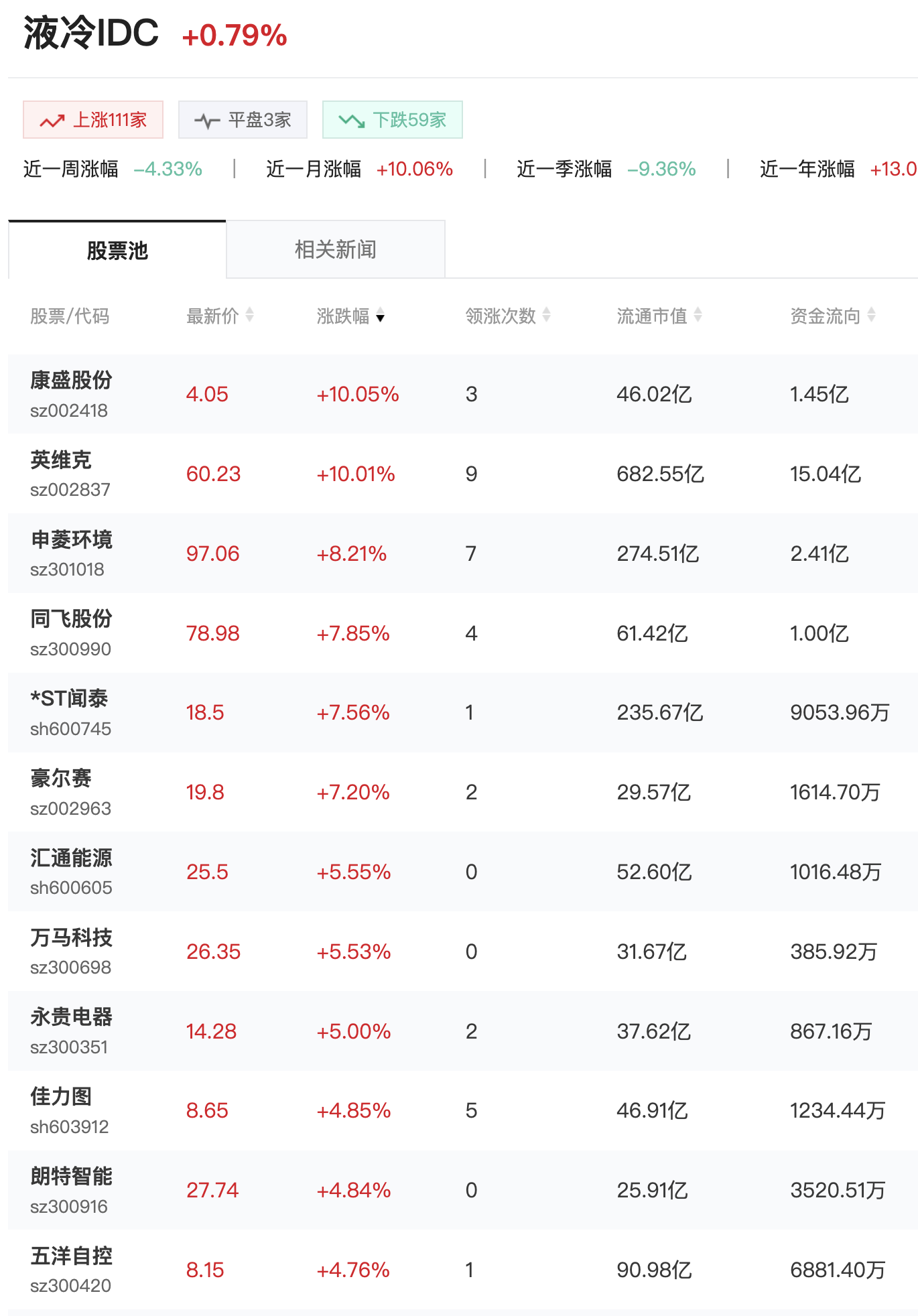 催化来自昨晚的一份半年报——8月24日晚间,液冷龙头英维克披露了2026年半年报,上半年营收30.17亿元,同比增长17.24%;二季度归母净利润环比暴增1934%。 AI太热了,不是比喻,是字面意思。 当英伟达最新AI服务器的冷却液温度可以飙到45摄氏度,比你家热水器的水温还高时,你就知道,散热这件事已经成了算力竞赛的“第二战场”。而A股的上市公司们,正闻风而动,掀起一场围绕液冷赛道的并购卡位战。 一根管道里的万亿生意 液冷是啥? 简单说,就是用水或特殊冷却液代替空气,把芯片的热量“搬”出去。传统数据中心靠风扇吹,跟夏天用电风扇一个道理——凉快是凉快,但芯片功率一上去就吹不动了。液体带走热量的能力是同体积空气的25倍,噪音还低25到30分贝。

二 | 目前最主流的方案叫“冷板式液冷”——把一块带微小通道的金属板贴在CPU/GPU上,冷却液流过板子,把热量带走。

三 | 听着简单,但里面涉及微通道精密加工、密封防漏、材料兼容性等一系列高壁垒技术。 这生意有多大?中金公司研报测算,全球散热器件市场2025至2027年的复合年增长率达59.8%。申万宏源更激进,预计2026年液冷市场空间超千亿,2028年突破3000亿元。而TrendForce的数据显示,液冷在AI芯片中的渗透率将从2025年的33%跃升至2026年的53%,明年逼近60%。 一句话:风口来了。 上市公司液冷卡位战 最新的案例是远东股份。8月24日晚间,这家老牌线缆企业公告,子公司拟以2.16亿元收购富的旺旺80%股权,切入液冷散热核心部件领域。 远东股份的逻辑很清晰:公司已有算力芯片检测设备和全光互联业务,收购液冷资产,正好凑齐“供电—互联—散热”的AI基础设施闭环。这也是这一轮液冷并购潮的典型特征——产业补链型,在AI硬件产业链上找缺口,强化自身闭环能力。 这不是孤例。今年以来,20多家上市公司公告涉足液冷领域,从做瓶盖的金富科技到做模具的祥鑫科技,跨度之大,堪称“跨界奇观”。东吴证券研报指出,液冷正从“可选”走向“必选”,英伟达Rubin平台已全面导入无风扇全液冷架构,这一趋势不可逆。

四 |  警惕并购“双刃剑” 当然,跨界并购历来是双刃剑。远东股份这次收购的静态市盈率约19倍,增值率达303%,并将产生新的商誉。若标的公司未来业绩不达预期,商誉减值就是埋下的雷。 东吴证券在研报中也给出谨慎判断:英伟达链目前仍由Cooler Master、AVC等台系厂商把持高端份额,大陆企业多通过代工或二供切入,短期赚的是加工利润;而Google链和国内CSP链,国产厂商直供机会才更明确。

五 | 液冷蓝海确实广阔,但“跨界”的船票,未必都能驶向黄金彼岸。答案,终究要落到那些冷板、分水器和CDU的出货量里。(文章来源:财联社)。
Current article:http://or6sfdj.bianneixuanbingqinyouxie.buzz/list_6l2mc/r2olz.html
Published on:15:14:26


